Polynomials
A factor is a place where the curve hits zero.
Here is . Slide along it and watch the height: every time it drops to exactly zero, you've found a factor.
scroll ↓
The factor theorem
Divide by and the remainder is exactly . So wherever the curve crosses the axis, the division comes out clean.
Testing for factors
, so is a factor.
: dividing by would leave remainder , so it isn't.
Factorising fully
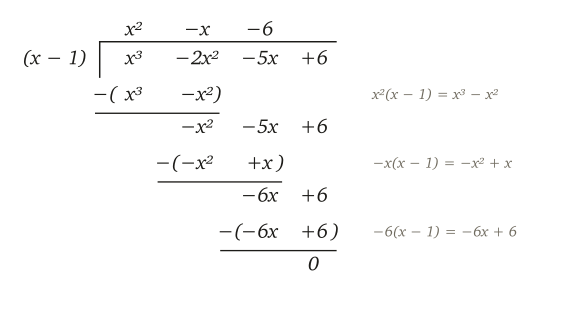
Dividing by leaves with no remainder — and that quadratic factorises too:
Sketching
Three factors, three roots: , and , all clean crossings. gives the -intercept, and the term sends it from bottom-left to top-right.
Chapter 6
Find one root, and the rest follow.
The grid method, the remainder theorem, repeated roots, and twelve graded exam questions with full worked solutions are waiting.